
February 12, 2026
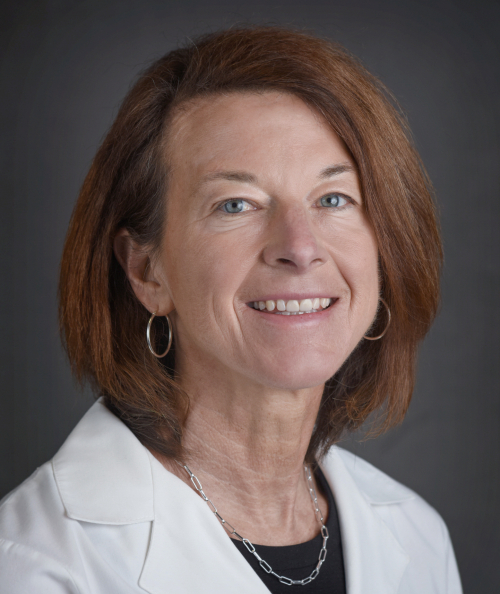
Dr. Birch works as the Associate Dean for pre-clerkship education at the Wake Forest University School of Medicine in Charlotte.
We spotlight NCAFP members who make unique impacts on their patients and communities. If you or one of your colleagues is providing a unique service, contact us so we can consider spotlighting you or your colleague!
Her parents were both educators: her mother taught elementary school, and her father led universities. Dr. Birch’s father served as the Vice President at Ohio Wesleyan University and then as the Vice Chancellor at the University of California at Santa Barbara. While he worked at Ohio Wesleyan, he had a friend called Dr. David Nardin, the town family physician in Delaware, OH. “He was our family doctor,” Dr. Birch says. “If one of us cut ourselves while we were playing by the pool, he’d take care of us. I also saw him on the sidelines of the local college to take care of the student athletes, and I knew he also saw patients on a nearby Indian reservation. I thought that if I could be like him, that’d be great.”
Dr. Birch had the chance to follow Dr. Narden’s example after she had completed her undergraduate degree at Stanford University and one year of Teach for America in Henderson, NC. Her time teaching high school science and economics classes there clarified for certain that she wanted to pursue medicine. “Teaching that year was the hardest job of my life,” Dr. Birch says. “I always joke with people that after I taught in that environment, medical school would be easy.”
When Dr. Birch enrolled at the University of Virginia School of Medicine, she encountered a program that brought her into direct contact with family physicians and later led her to become a family physician: the grant program from the Robert Wood Johnson Foundation. Recipients were awarded full tuition to become “generalist scholars” and study medicine in close mentorships with rural physicians. “As part of the program, you went and lived in the physicians’ homes,” Dr. Birch says. “I was very fortunate to be selected for it.”
Through the program, Dr. Birch soon enjoyed several pivotal mentors in the family physicians who trained her (and remains in touch with many of them). Dr. Birch explains that she lived in close proximity to several rural doctors: “One of them was Dr. Sam Showalter near Harrisonburg,” she says. “He was a wonderful mentor while I lived with him and his family.” She found another mentor when she studied in South Carolina: “I worked with Dr. Oscar Lovelace in a town called Prosperity, where he was the only doctor in town for primary care and did everything for that community. I really looked up to him as someone who took care of that entire town, including me. I lived in this little house behind his home, and he and his family brought me their tomatoes.”
Her first North Carolina mentor was (and remains) Dr. Mary Hall, who was then the residency director at the Carolinas Medical Center in Charlotte. “The chair at UVA told me that Dr. Hall was the best residency director in the country,” Dr. Birch says. “She was my first reason for coming to North Carolina for residency. Then she became my mentor in a number of ways as a physician and academic leader, which was deeply fortunate. She and I still meet every month.”
While Dr. Birch helped develop the curriculum of the University of North Carolina School of Medicine regional Charlotte campus back in 2011, she enjoyed thinking through what medical students need from their pre-clerkship training. (“Pre-clerkship” refers to the first two years of medical school, when students are trained to begin clinical rotations, or their clerkships, in the third and fourth years.) “We were asking ourselves, how can we educate our future physicians better?” she says.
The problem-based method became more and more important to Dr. Birch’s educational principles. “What I found is that schools which moved to problem-based learning saw improvements,” she says. Together with the other members of the task force, Dr. Birch recommended moving to problem-based training.
When the time came to develop curriculum for the Wake Forest University School of Medicine (WFUSM) in Charlotte, Dr. Birch jumped at the chance. “I really wanted to build something here in Charlotte,” she says. “The physicians in Charlotte are just amazing, and so we really knew that we could build something special here.”
The medical school opened in summer 2025. Now the Associate Dean for pre-clerkship education there, Dr. Birch continues to praise Charlotte’s physicians and the new medical students: “I just have so much praise for them,” she says.
Likewise, Dr. Birch praises her fellow academic leaders and the flexibility that the new Charlotte medical school will enjoy. The new campus will use problem-based curriculum, whereas the WFUSM in Winston-Salem uses a more traditional modality. “What’s great about that is that the two models offer students the opportunity to choose a campus based on how they like to learn.” Dr. Birch and her Charlotte colleagues remain in close working contact with the Winston-Salem campus to reflect the best course objectives across both campuses. “It’s been a great collaboration!” Dr. Birch says.
